Thailand BFSI Talent Market: 5 Key Hiring Challenges

Updated: Sep 23

The Banking, Financial Services, and Insurance (BFSI) sector in Thailand is undergoing a massive evolution. With the Bank of Thailand introducing new licenses for virtual banks and financial institutions racing to adopt artificial intelligence, the industry is modernizing at an incredible pace. However, this digital transformation has created a highly volatile hiring landscape.
For companies operating in the financial sector, securing top tier professionals is harder than ever. The talent market in Thailand is shifting rapidly. Traditional banks are no longer just competing with other banks; they are competing with agile FinTech startups and global tech giants for the exact same talent pool in a fiercely competitive job market. Furthermore, modern financial professionals have changing expectations regarding workplace flexibility, corporate culture, and career progression.
If your financial institution is struggling to attract the best minds in the industry to achieve its business goals, you must rethink your approach. Here are the five key challenges companies face in the Thai BFSI talent market today and the strategic solutions required to overcome them.
1. The Demand for Hybrid FinTech Skills
The most critical challenge in the BFSI industry in Thailand faces today is a massive skills gap. There is a severe shortage of professionals who understand both traditional finance and modern technology.
As the country prepares for the full launch of virtual banks, companies desperately need software engineers who understand banking regulations and financial analysts who can code in SQL or Python. This hybrid skill set is incredibly rare. Traditional finance graduates often lack the deep technical knowledge required to build digital platforms, while brilliant software developers often do not understand the strict security rules of the banking sector.
To overcome this, forward thinking banks are rewriting their job descriptions. Instead of searching for the perfect hybrid candidate, they are hiring highly adaptable tech professionals and putting them through intensive financial training bootcamps. They are focusing on core capabilities rather than rigid university degrees to bridge this widening gap.
2. Scarcity of Regulatory and Compliance Experts
As the financial landscape becomes more digital, the risk of cyber threats increases exponentially. Consequently, government regulations regarding data security, the Personal Data Protection Act (PDPA), and ESG standards have become incredibly strict.
This has caused a massive spike in demand for experts in regulatory compliance and risk management. Every major bank and insurance firm is hunting for certified officers who can navigate complex local laws while maintaining global financial standards. Because the talent pool is so small, these professionals command incredibly high salaries.
To secure this talent, a strong employer branding strategy is essential. Financial companies must leverage social media and professional networks to showcase their commitment to ethical governance. Compliance officers want to know that they will have a seat at the executive table and that the company takes risk management seriously, rather than just treating it as a mandatory administrative chore.
3. Modernizing Traditional Banking Culture
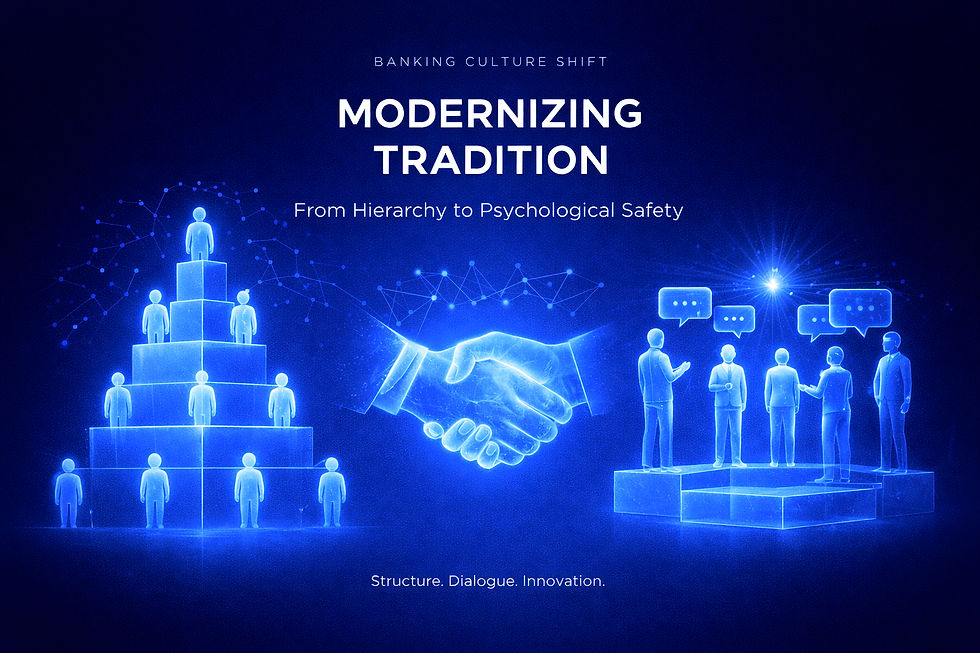
The traditional corporate culture of large Thai banks is deeply rooted in hierarchy, strict dress codes, and rigid office hours. While this structure worked for decades, it is a major deterrent for the modern workforce.
Gen Z and millennial professionals highly value a healthy workplace culture and a flat organizational structure where they can freely share ideas. The traditional concept of Kreng Jai (extreme consideration and deference to seniority) can sometimes stifle innovation in a fast moving digital banking in Thailand environment. If a brilliant junior analyst is afraid to point out a flaw in a new digital product to a senior manager, the company will ultimately suffer.
Financial institutions must actively work to build a positive work environment that fosters psychological safety. By loosening rigid office rules and actively building a leadership style that encourages employee feedback, traditional banks can create an inclusive space where all team members feel valued. This attracts innovative, forward thinking talent.
4. High Turnover in Revenue Generating Roles
While tech and compliance roles face a shortage of candidates, customer facing roles face a different challenge: massive turnover. Positions in wealth management, corporate sales, and insurance brokering are high pressure environments.
The stress of meeting aggressive monthly targets often leads to rapid employee burnout. When a top performing wealth manager leaves a firm, they frequently take their high net worth clients with them, causing a direct loss of revenue for the institution.
Improving employee retention and boosting long term employee engagement requires a shift in management style. Banks must move away from purely metric driven management and focus on comprehensive well being. Offering mental health support, modernizing software tools, and providing true flexible work arrangements, such as the option of working from home a few days a week, will help keep your best performers loyal and energized.
5. Heavy and Slow Recruitment Procedures

The BFSI sector is heavily regulated, which means background checks, credit evaluations, and compliance screenings are a mandatory part of banking and finance recruitment. However, many institutions use these requirements as an excuse for an agonizingly slow hiring process.
If your recruitment cycle involves six rounds of interviews and takes two months to generate an offer letter, you will lose the best candidates to agile FinTech startups that make decisions in a matter of days. Top tier fintech talent simply will not wait around.
To fix this, HR departments must optimize their talent acquisition strategies. You can conduct initial interviews and technical assessments simultaneously. Background checks can be initiated earlier using automated digital verification tools. By streamlining the internal approvals and executing a seamless digital onboarding process, you can present a competitive offer before your rivals even schedule their second interview.
Key Takeaways and Conclusion on BFSI Talent Market
The Thai financial sector is ripe with opportunity, but the war for talent is fierce. To succeed in 2026, BFSI companies must abandon outdated hiring habits.
By addressing the hybrid skills gap through internal training, amplifying your employer branding, modernizing traditional office cultures to offer true flexibility, and drastically speeding up the interview process, your institution can secure the talent necessary to lead the market. Adapting to the modern expectations of financial professionals is the only way to ensure long term business success.
Partnering with Hyperwork Recruitment
Hiring for the financial sector requires deep industry knowledge and an expansive network of passive candidates. Standard job postings are simply not enough to capture elite BFSI professionals.
At Hyperwork Recruitment, we specialize in financial services jobs in Bangkok companies need to fill urgently. Our specialized recruiters understand the complex regulatory requirements and the specific technical skills needed for modern banking. We deliver highly vetted, culturally aligned candidates who are ready to drive your digital transformation forward.
Contact us today to elevate your financial recruitment strategy.
References
Bank of Thailand. (2025). Consultation Paper on Virtual Bank Licensing Framework. Retrieved from https://www.bot.or.th
Deloitte. (2026). Banking and Capital Markets Outlook: The Future of Financial Talent. Retrieved from https://www.deloitte.com
PwC Thailand. (2025). Navigating the ESG and Regulatory Landscape in Thai Financial Services. Retrieved from https://www.pwc.com/th
Hyperwork Recruitment. (2026). Market Insights: Financial Services Talent Trends. Retrieved from https://hyperwork.co.th



Comments